Company · 14 September 2024
Transform your business into a well-oiled machine! 🚀

In The E-Myth Revisited, Michael E. Gerber describes a management system as a structured framework that guides how a business is run, ensuring that every aspect of the business operates efficiently and consistently, even in the owner’s absence.
In The E-Myth Revisited, Michael E. Gerber describes a management system as a structured framework that guides how a business is run, ensuring that every aspect of the business operates efficiently and consistently, even in the owner’s absence. It is a set of standardized processes, procedures, and policies that allow the business to function smoothly and grow sustainably.
Key Elements of a Management System:
1. Standardized Processes and Procedures.
Gerber emphasizes that a management system involves creating documented, repeatable processes for every aspect of the business. This includes how products are made, how customer interactions are handled, how sales are managed, and how daily operations are carried out.
The goal is to create a system that anyone in the business can follow, ensuring consistency and quality in every area.
2. Operational Manuals
He advocates for the creation of comprehensive operational manuals that outline how each task should be performed. These manuals serve as the cornerstone of the management system, guiding employees on how to carry out their roles efficiently and consistently.
By documenting processes in manuals, a business ensures that knowledge is not locked in the heads of individual employees, but is accessible and standardized across the organization.
3. System-Dependent, Not People-Dependent.
A key concept in Gerber’s management system is that the business should be system-dependent, not people-dependent. This means that the success of the business should not rely solely on the skills or presence of specific individuals (including the owner). Instead, the systems in place should ensure that the business can operate effectively regardless of who is running it.
By focusing on systems, the business can maintain consistency and quality even as employees come and go.
4. Management by Systems, Not by Personalities.
Gerber points out that many small businesses are managed by the personalities of the owners or key employees, which can lead to inconsistency and chaos. A proper management system moves the business away from this approach, instead managing by systems where every task has a defined method of execution.
This approach helps eliminate the variability that often plagues small businesses and makes scaling and delegation possible.
5. Continuous Improvement and Adaptation.
A management system is not static; it should evolve with the business. Gerber stresses the importance of reviewing and improving the system regularly to adapt to changing market conditions, customer needs, and business growth.
This ensures that the business remains competitive and efficient over time.
The Purpose of a Management System
Consistency
A management system ensures that every product or service is delivered with the same level of quality every time, regardless of who performs the task.
Scalability
By having a well-defined system, the business can grow and scale without relying solely on the owner. This allows the owner to work **on** the business rather than **in** it.
Delegation
With clear processes and procedures in place, the business can delegate tasks to employees, knowing that the work will be done correctly.
Predictability
A management system creates a predictable business environment where outcomes are more controlled and less chaotic.
In essence, Gerber’s concept of a management system is about creating a “franchise prototype” for the business—one that can be replicated consistently, whether the owner is present or not. It transforms the business into a system where every component is designed to work together seamlessly, driving efficiency, quality, and growth.
More from Sycamore
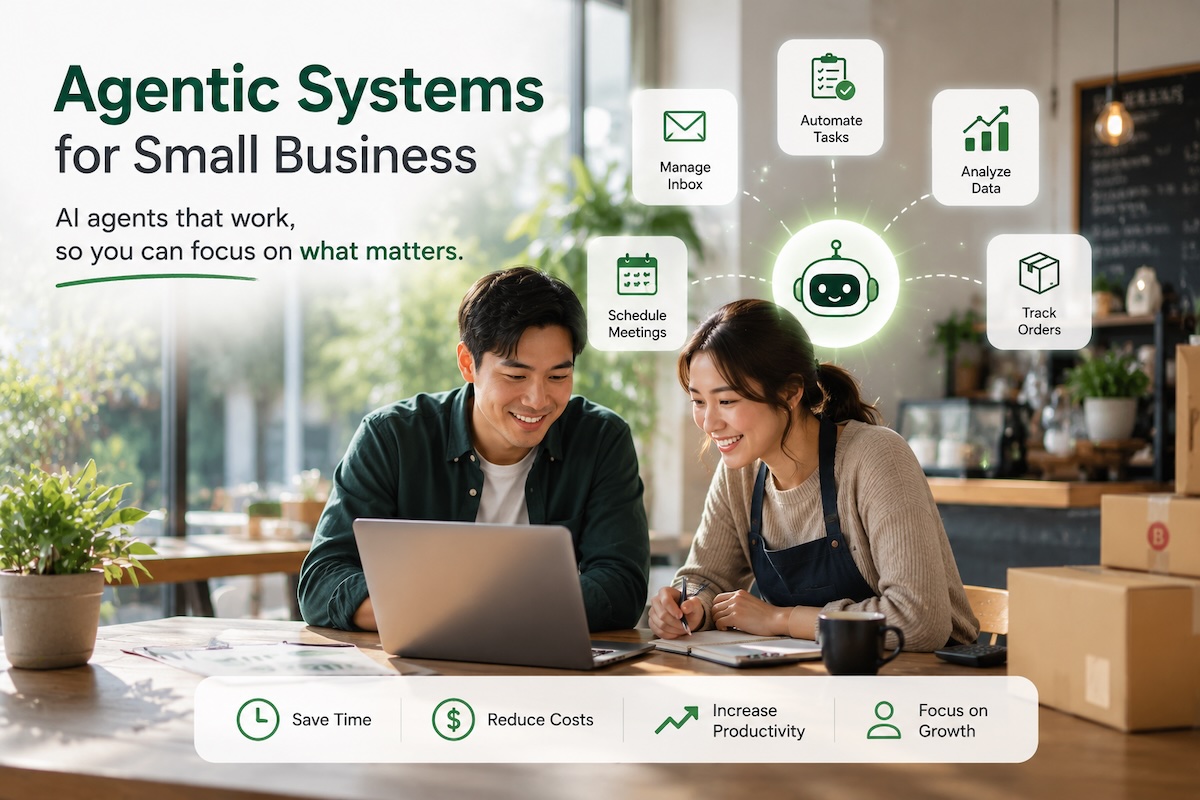
Agentic Team - Room to Grow, Before You're Ready to Hire
Agentic systems let small business owners scale before they can afford a hire, and keep the business running when a staff member leaves. Here's what that looks like in practice.

What Building 5 Apps with AI Coding Agents Taught Us
What Building 5 Apps with AI Coding Agents Taught Us Real numbers, real challenges, and why the human still matters most. Over the past few months, our team at Linx has been going deep with AI coding agents — specifically Claude Code — across a range of real client projects and our own products.
AI Middleware: The Missing Link Between Business Systems and the Future
In today’s fast-changing digital landscape, artificial intelligence (AI) has become a critical enabler of smarter business operations. Yet, many organizations still struggle to connect their existing ERP and management systems to modern AI models like ChatGPT or GPT-4.